Answering your search for an effective horticultural oil spray, this guide highlights top options that help control insects and fungal diseases in organic and conventional gardens. Ideal for homeowners, balcony growers, and small-scale producers, these sprays are suitable for a wide range of plants from vegetables to ornamentals. The selections emphasize year‑round protection, ease of use, and compatibility with organic gardening practices.
| Product | Best For | Key Benefit |
|---|---|---|
| Bonide All Season Horticultural & Dormant Spray Oil (32 oz RTU) | Year‑round home gardeners | Broad coverage for insects and diseases with organic approval |
| Bonide All Seasons Horticultural & Dormant Spray Oil (32 oz Ready‑to‑Spray) | Dormant and growing season protection | 3‑in‑1 protection against insects, mites, and diseases |
| Bonide All Seasons Horticultural & Dormant Spray Oil (16 oz Concentrate) | Budget-conscious growers | Concentrate form for flexible mixing and application |
| Monterey Horticultural Oil RTS (32 oz) | Indoor/outdoor trees and fruit crops | Effective as a dormant and growing season spray |
| Safer Brand 16 oz Horticultural & Dormant Spray Oil | Chemical‑sensitive or organic‑minded gardens | Plant‑safe option with broad pest and disease control |
Bonide All Season Horticultural Oil 32 oz Ready-to-Use
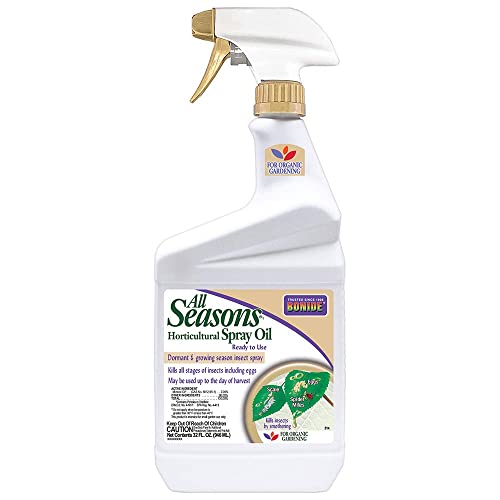
Best for: Home gardeners seeking immediate, ready-to-use protection. This product targets a broad spectrum of listed insects and diseases and is approved for organic gardening. The active ingredient is refined mineral oil, making it suitable for use on fruits, vegetables, nuts, flowers, and ornamentals to prevent powdery mildew and leaf spot.
Why selected: The Ready-to-Use format simplifies application without measuring or mixing. It provides year‑round preventive coverage and is explicitly designed for organic production, aligning with organic growers and hobbyists who prioritize sustainability.
Caution: Do not apply during extreme heat; ensure thorough coverage but avoid overspray on desirable beneficials in dense landscapes.
Bonide All Seasons Horticultural Oil 32 oz Ready-to-Spray

Best for: Gardeners needing 3‑in‑1 year‑round protection. This product envelops and smothers a variety of insects including adelgids, aphids, scale, mites, and mealybugs, while also helping prevent powdery mildew and rust diseases.
Why selected: It combines insect control with disease prevention in a single spray, useful for both dormant and growing stages. The Ready-to-Spray format reduces prep time and suits busy gardeners.
Caution: Avoid applying during flowering periods on blossoms to prevent potential impact on pollinators in heavily visited gardens.
Bonide All Seasons Horticultural Oil 16 oz Concentrate

Best for: Growers who prefer a concentrated mix to tailor their spray strength. The concentrate is designed to control listed insects and diseases and remains suitable for organic gardening and ornamentals.
Why selected: Concentrates offer cost efficiency and flexibility for large or recurring spray programs, making it better for growers who maintain multiple plant varieties or large plots.
Limitation: Concentrate handling requires accurate mixing to ensure consistent pest control and plant safety.
Monterey Horticultural Oil RTU 32 oz
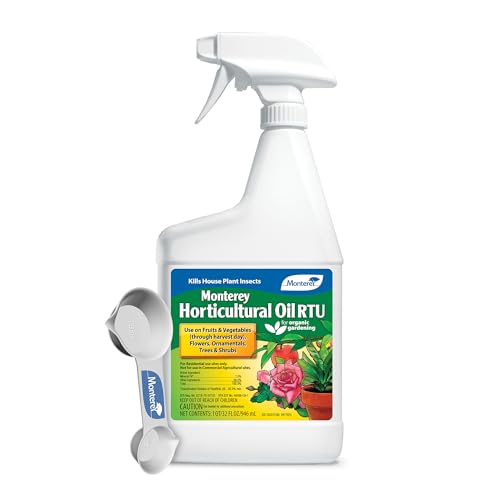
Best for: Gardeners seeking a reliable RTU option for a broad range of trees and plants, including fruiting varieties. It covers dormant and growing season needs, making it versatile across seasons.
Why selected: Monterey’s oil is a widely trusted option with strong performance in smothering soft-bodied insects and helping to reduce disease pressure when used as part of an integrated program.
Caution: Oil sprays can leave residue on glossy foliage; test on a small area first to ensure compatibility with sensitive ornamentals.
Safer Brand 16 oz Horticultural & Dormant Spray Oil

Best for: Gardeners seeking a green, broad-spectrum option that covers insects, mites, and diseases year round. The product claims coverage across many crops and pests listed on the label.
Why selected: Safer Brand emphasizes a natural approach with broad applicability, appealing to organic and pesticide-conscious growers who want dependable protection without harsh chemistries.
Limitation: Always follow label directions for crop-specific use, as some crops may have tighter restrictions or require timing adjustments for optimal results.
Buying Guide: Key Considerations For Horticultural Oil Sprays
What should you consider when choosing a horticultural oil spray?
- Active ingredient and organic compatibility: Most options use mineral oil or refined oils. If you grow organic produce, verify organic certification compatibility on the label.
- Form: Ready-to-use vs. concentrate. RTU is convenient for quick applications; concentrates save money and let you tailor spray strength.
- Seasonality: Some products offer year-round protection, while others are optimized for dormant or growing seasons. Align with your local climate and plant calendar.
- Target pests and diseases: Check whether the label lists the insects and fungal diseases you commonly encounter in your garden.
- Plant safety: Oils can cause phytotoxicity on sensitive species in hot sun or on new growth. Test on a small area if unsure.
- Coverage and application: Consider tank mix compatibility with other products and the recommended spray intervals to maintain protection without overuse.
- Environmental impact: Prefer products with clear organic or eco-friendly claims if you aim to minimize environmental impact.
Frequently Asked Questions
- What is horticultural oil and how does it work?
Horticultural oil coats insects and eggs, suffocating them. It also helps reduce some fungal spores on plant surfaces when used as part of a preventive program. - Can I use horticultural oil on all plants?
Most plants tolerate horticultural oils, but avoid applying during extreme heat or directly on newly emerged leaves. Test on a small area first if needed. - Is it safe to combine horticultural oil with other pesticides?
Compatibility varies by product. Always check label recommendations and perform a small compatibility test before tank-mixing. - When is the best time to spray horticultural oil?
Spray during cooler parts of the day and avoid flowering stages on pollinator-attractive plants to reduce impact on beneficial insects. - Is horticultural oil effective against powdery mildew?
Yes, many formulations help prevent powdery mildew when applied as part of a seasonal program along with cultural practices. - What should I consider if I have fruit trees?
Choose an oil labeled for fruit trees and follow dormant and growing-season guidelines to protect blossoms and fruit development.