Answering the need for precise, water-efficient irrigation, weather-controlled sprinkler systems automatically adjust schedules based on local conditions. These products are best for homeowners who want convenient, app-driven control, reduced water waste, and adaptable zones for lawns, gardens, and landscaping. The top picks below use weather data and smart scheduling to optimize watering while fitting indoor or outdoor setups. See the brief product table and then detailed sections to compare capabilities and ideal buyers.
| Product | Zones | Best For |
|---|---|---|
| Rachio WiFi Smart Sprinkler Controller (8-Zone) | 8 | Small-to-mid yards; easy DIY install |
| Rachio WiFi Smart Sprinkler Controller (16-Zone) | 16 | Larger landscapes; robust scheduling |
| Orbit B-hyve Indoor 8-Zone | 8 | Indoor installation; flexible setup |
| Hunter Hydrawise HPC400 | 4 (expandable to 32) | Smart, scalable systems; professional-grade control |
| Rain Bird ARC6 | 6 | App-based control with WeatherSense features |
Rachio 8-Zone WiFi Smart Sprinkler Controller

The Rachio 8-Zone Controller uses a free app for precise control and local weather data. It features Weather Intelligence that skips watering during rain, wind, or freeze conditions and adapts schedules to seasonal changes. Best for small yards and DIY enthusiasts who want a straightforward installation and reliable app-based management.
- Best for: users who want plug-and-play smart irrigation with automatic weather adjustments.
- Why selected: compact zone count paired with robust weather-based scheduling helps conserve water year-round.
Caution: Limited to 8 zones, so larger landscapes require more zones or a different model.
Rachio 16-Zone WiFi Smart Sprinkler Controller

This 16-zone model is designed for larger yards or multiple watering zones with local weather intelligence and rain skip features. It supports more complex scheduling and finer control across bigger landscapes. Best for homeowners needing extensive zone management with the same app-based workflow as the smaller model.
- Best for: larger properties or properties with diverse watering needs across many zones.
- Why selected: expanded zone capacity enables comprehensive irrigation control without adding hardware complexity.
Caution: Higher setup complexity compared to the 8-zone version; ensure compatible irrigation layout before installation.
Orbit B-hyve Indoor 8-Zone Smart Controller

The Orbit B-hyve indoor 8-zone model offers app-based irrigation control with Weather Adjustment. It supports multiple irrigation methods and custom programs for healthier landscapes. Best for indoor installation where weather-aware watering is desired and where mobile management is convenient.
- Best for: inside installations seeking weather-adjusted schedules and multi-zone control.
- Why selected: flexible scheduling and remote management improve water efficiency across zones.
Caution: Indoor placement may require careful cable routing and power access for optimal performance.
Orbit B-hyve Outdoor/Indoor 12-Zone Smart Controller

This 12-zone Orbit controller is designed for indoor/outdoor use with weather-aware scheduling. It supports custom irrigation schedules and remote management for versatile properties. Best for homeowners who need flexibility across mixed indoor/outdoor zones and a weather-aware approach.
- Best for: mixed-use spaces with both indoor and outdoor zones.
- Why selected: weather-aware scheduling helps align irrigation with local forecasts across zones.
Caution: Outdoor exposure requires weatherproofing and secure installation to protect electronics.
Orbit B-hyve 6-Zone Smart Controller

Six zones with app control offer a compact yet capable solution for small yards or patios. Smart scheduling and remote monitoring help ensure efficient watering, though this model has fewer zones than larger Orbit options. Best for smaller properties seeking a balance of features and size.
- Best for: smaller landscapes needing reliable app control without excess hardware.
- Why selected: straightforward setup and solid weather-based adjustments across limited zones.
Caution: Fewer zones may require prioritizing watering for essential areas; plan zone layout accordingly.
Orbit B-hyve XR 8-Zone Smart Timer
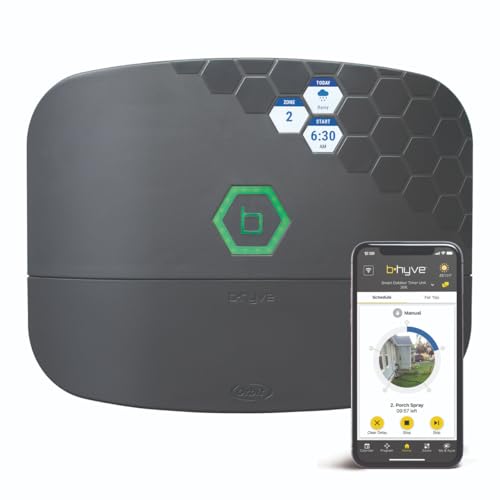
The XR model adds WiFi-enabled control with multi-zone capacity and customizable programs. It supports remote management and weather-aware scheduling for efficient irrigation. Best for users who want modern automation with flexible programming across eight zones.
- Best for: users seeking advanced WiFi control and customizable multi-zone programs.
- Why selected: XR offers robust remote management and weather-based scheduling for varied landscapes.
Caution: Outdoor installation requires proper weatherproofing and secure mounting for reliability.
Hunter Hydrawise HPC400 Smart WiFi Controller

The Hydrawise HPC400 offers smart WiFi control with Weather-Based adjustments designed to maximize water savings. It starts with four zones and can expand up to 32 zones, making it suitable for expanding lawns or gardens. Best for serious irrigation projects needing scalable, weather-aware management.
- Best for: scalable systems that can grow with your landscape.
- Why selected: WeatherSense-like adjustments help cut water usage as conditions change.
Caution: Expansion modules are required to reach higher zone counts; verify expansion compatibility with current hardware.
Rain Bird ARC6 App-Based Indoor Smart Timer

The ARC6 provides indoor app-based control with WeatherSense features. It supports six zones and is EPA WaterSense certified. Best for homes prioritizing simplicity, integration with the Rain Bird ecosystem, and reliable weather-based adjustments.
- Best for: users who prefer Rain Bird’s app and ecosystem integration.
- Why selected: WaterSense certification signals efficiency aligned with common utility goals.
Caution: Indoor focus may require additional outdoor hardware for full landscape coverage in larger yards.
Buying Guide: Weather-Controlled Sprinkler Systems
- How many zones do you need? More zones offer finer control for distinct areas but require more wiring and setup. Choose 8–16 zones for typical medium yards; consider 32 zones for large landscapes.
- Indoor vs. outdoor installation. Some models are designed for indoor mounting with weatherproof components; others are built for outdoors. Plan for weather exposure and mounting location accordingly.
- Weather-based scheduling features. Look for systems with local weather data integration and rain/freeze adjustments to maximize water savings.
- App reliability and remote management. A stable mobile app with easy scheduling, zone monitoring, and remote adjustments reduces maintenance and helps adapt to changing conditions.
- Expandability. If you anticipate landscape growth, choose systems that scale from 4–8 zones up to 32 or more with expandable modules.
- Power and connectivity. Ensure a stable power source and WiFi coverage where the controller will be installed. Consider backup options if your network is spotty.
- Compatibility with existing irrigation hardware. Confirm valve types, wiring practices, and manufacturer recommendations to avoid compatibility issues.
Frequently Asked Questions
What is a weather-controlled sprinkler system?
A system that automatically adjusts watering schedules based on local weather data and forecasts to reduce water use and maintain healthy landscapes.
Do I need a hub or bridge for these controllers?
Most models use WiFi directly from a home router, but some may require additional hubs for certain features or older networks.
Can these systems be installed myself?
Yes, many models are designed for DIY installation. Review the installation guide and ensure you have basic electrical and irrigation wiring knowledge.
Will these systems work with Alexa or Google Assistant?
Several models offer voice-control compatibility, but verify specific integration for each product before purchase.
What happens if there’s a power outage?
Some controllers store programs locally and resume after power restoration; others may require re-entry of schedules. Check the product’s manual for details.
Is there a maintenance requirement?
Periodically check weather data settings, irrigation zones, and valve wiring. Clean filters and inspect solar or power connections as part of routine maintenance.