The best squirrel-proof bird feeders use weight-activated or shroud-based mechanisms to keep seeds accessible to birds while denying hungry squirrels. This guide compares five top options, so you can choose the right solution for your yard, porch, or deck. Ideal for homeowners fed up with seed waste, apartment dwellers with limited space, or avid bird lovers seeking durable, long-term protection. Each product below highlights who it’s best for and why it stands out, along with practical limitations to consider before you buy. A quick summary table follows to help you compare at a glance.
| Product | Best For | Capacity |
|---|---|---|
| Squirrel Solution200 | Medium yards seeking true squirrel-proofing | 3.4 lb |
| Squirrel Buster Classic | Budget-conscious users wanting strong protection | 2.4 lb |
| Brome Squirrel Solution 150 | Compact, dependable protection with extra durability | 2.6 lb |
| GAINSEN Squirrel-Proof Feeder | Heavy-use outdoor spaces needing rust resistance | 3 lb |
| Squirrel Buster Plus | High-capacity, flexible feeding with long-term savings | 5.1 lb |
Squirrel Solution200 Squirrel-Proof Bird Feeder

Best for medium yards that need reliable squirrel prevention without frequent refilling. The feeder’s weight-activated shroud closes access when a squirrel lands on the feeder, effectively keeping seed for birds. A free seed funnel simplifies refills and reduces mess, and the design emphasizes long-term seed savings by limiting loss to wildlife. The feeder is compact enough for patios yet sturdy enough for year-round use. A potential limitation is seed capacity, which is moderate versus larger-capacity models.
Who it’s best for
Owners with a moderate bird population and persistent squirrel challenges who want a compact, proven solution with practical refilling aids.
Why chosen
It demonstrates a strong balance of protection, affordability, and ease of use with a useful accessory included.
Limitations to note
Seed capacity is not the largest among options, so more frequent refills may be needed for busy yards.
Squirrel Buster Classic Squirrel-Proof Feeder

Best for budget-minded buyers who want solid, time-tested squirrel protection. The weight-activated shroud reliably blocks access to seeds when a larger animal approaches, reducing waste. The build emphasizes long-term savings by preventing seed loss, and the design minimizes wear with chew-proof exposed parts. A potential drawback is a smaller capacity compared to some larger models, which may require more frequent refills in high-traffic areas.
Who it’s best for
Backyards with moderate bird traffic and a need for a cost-effective, reliable solution that still delivers strong squirrel deterrence.
Why chosen
It combines proven protection with economical operation, making it a practical pick for many households.
Limitations to note
Less seed capacity means more frequent fills in busy feeders-rich environments.
Brome Squirrel Solution 150

Best for small to medium yards needing a durable, feed-efficient option. The feeder uses a weight-activated shroud to deny seed access as soon as a squirrel climbs on the feeder. Its chew-proof construction helps resist tampering, and a free seed funnel supports quick refills with less mess. The feeder’s capacity is modest, which can be ideal for controlled feeding or smaller seed loads but may require more frequent replenishment in busy situations.
Who it’s best for
Homeowners seeking a compact, chew-resistant design with dependable squirrel deterrence and a helpful refill accessory.
Why chosen
It offers strong protection at a compact size, pairing durability with a practical refilling solution.
Limitations to note
Lower seed capacity compared with larger units may require more frequent refills in bird-rich areas.
GAINSEN Squirrel-Proof Metal Bird Feeder
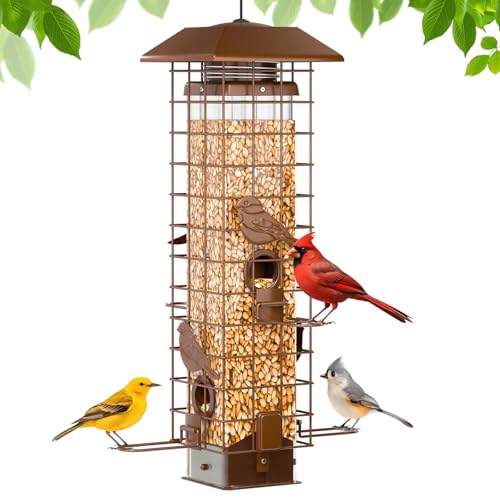
Best for outdoor spaces that require weather resistance and easy cleaning. This feeder combines a weight-activated cage with a removable base, simplifying maintenance. The metal shell and crack-resistant inner tube offer durability in all seasons, and the top seal helps resist rain intrusion. A caveat is that some users may prefer larger perches or capacity for heavier bird populations, as this model focuses on protection and longevity over extreme capacity.
Who it’s best for
Gardens or balconies exposed to the elements where longevity and cleaning ease are priorities.
Why chosen
The design emphasizes rust resistance and year-round performance with straightforward maintenance features.
Limitations to note
Capacity and perch count are moderate, which may not suit very large flocks.
Squirrel Buster Plus Squirrel-Proof Feeder

Best for high-capacity needs and flexible feeding. This model combines a large seed reserve with a robust, user-friendly weight-activated system. The feeder blocks squirrel access while allowing birds to feed unobstructed. It’s compatible with pole mounting (pole adaptor sold separately), enabling versatile placement. A potential limitation is higher price compared with smaller units, though long-term seed savings can offset the initial cost.
Who it’s best for
Larger yards or busy feeders where maximizing seed savings and bird access is important, and you’re willing to invest upfront.
Why chosen
Highest capacity among the options, with proven protection and flexible mounting options.
Limitations to note
Higher upfront cost and the need for optional mounting accessories may be a consideration.
Buying Guide: How To Pick The Right Squirrel-Deterrent Feeder
What mechanism best fits my yard?
Weight-activated perches and shrouds are the most common. They physically restrict seed access when a heavier animal approaches, primarily deterring squirrels while letting small songbirds feed. Consider the typical wildlife in your area and choose a model with a proven track record against those animals.
What capacity do I need?
Capacity ranges from about 1.3 to 5.1 pounds. If your yard enjoys frequent bird visits, a larger model reduces refills and supports longer feeding intervals. For smaller spaces or low bird activity, a compact option can reduce waste and expense.
Is durability important?
Chew-proof materials and weather-rated builds extend life. Metal cages and rust-resistant finishes are common in higher-end models, protecting the feeder from the elements and pets year-round.
How easy is cleaning and refilling?
Removable bases, top-sealing designs, and included refilling funnels simplify maintenance. Look for feeders with simple disassembly and spill-prevention features to reduce mess and seed waste.
Do I need mounting flexibility?
Consider whether you prefer hanging, pole mounting, or a combo setup. Some feeders offer multiple mounting options or require additional accessories for versatility.
What about cost and long-term savings?
While some models have a higher upfront price, they often pay for themselves by reducing seed loss. Compare the total potential savings from squelching seed theft against the purchase price and ongoing maintenance costs.
FAQ
- Do squirrel-proof feeders truly stop all squirrels?
- Will these feeders affect birds other than squirrels?
- What maintenance is required?
- Can I use any seed with these feeders?
- Are there any safety considerations for pets?
- How do I decide between capacity and price?
Most use weight-activated mechanisms that close feeding ports when a squirrel climbs on. Some larger birds or unusually clever squirrels may test the system, so monitor and clean as needed.
They are designed to allow small birds to feed while preventing larger mammals. Most songbirds will still access seeds normally when the mechanism is not activated by heavier animals.
Regular cleaning of the feeding ports, removal of mold or seed clumps, and ensuring the weight mechanism remains free of debris. Periodic resealing and inspection for rust or wear is helpful.
Most are compatible with standard wild bird seed blends. Avoid seeds that attract nuisance pests or mold easily, and follow manufacturer guidance for best results.
Place feeders away from areas reachable by dogs or cats to prevent chasing or disturbance. Ensure mounting is secure to avoid accidental falls.
Estimate your typical bird visitation, your available space, and budget. If seed loss is frequent in your yard, a higher-capacity model may offer better long-term value.