If you’re protecting homegrown tomatoes and vegetables, you want effective, low-toxicity options that are safe for edible plants. This guide highlights five industry-relevant choices designed for organic gardeners and hobby growers. Each product section explains who it’s best for, why it was chosen, and any notable limitations to consider.
| Product | Best For | Key Benefit | Organic/Label |
|---|---|---|---|
| BioAdvanced Organics Tomato, Vegetable & Fruit Plant Bug Spray | Edible crops | Fast-acting, curative control | Organic-friendly label |
| Safer 5118-6 Insect Killing Soap Concentrate | Soft-bodied pests on foliage | Gentle on plants | OMRI Listed |
| Safer Brand Garden Insect Control | General garden pests | Natural oils, safer around kids | Natural oils formula |
| Bonide Captain Jack’s Tomato & Vegetable Spray | Tomatoes & vegetables | Broad pest and disease control | Ready-to-use |
| BioAdvanced Tomato & Vegetable Pest Control | Multiple vegetables | Fast protection | Ready-to-use liquid |
BioAdvanced Organics Tomato, Vegetable & Fruit Plant Bug Spray
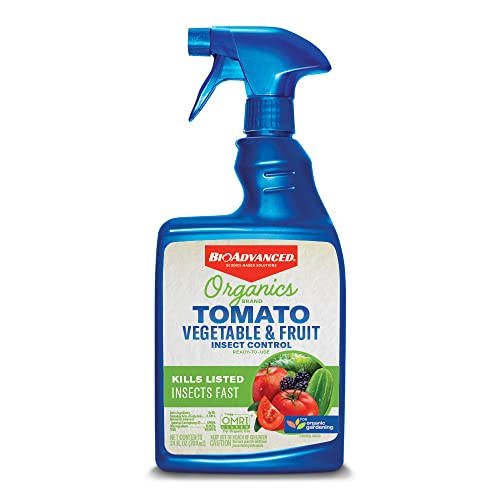
This ready-to-use spray targets a range of common pests on edibles. It provides fast contact kill for aphids, caterpillars, mealybugs, spider mites and other listed pests. The product is noted for curative control against powdery mildew and is suitable for vegetables, fruit trees, and herbs.
Best for: Home gardeners who want quick results on edible crops with a focus on easy, direct application. Better for quick knockdown on actively infested plants. Caution: Avoid applying during bloom to minimize impact on pollinators.
Safer 5118-6 Insect Killing Soap Concentrate
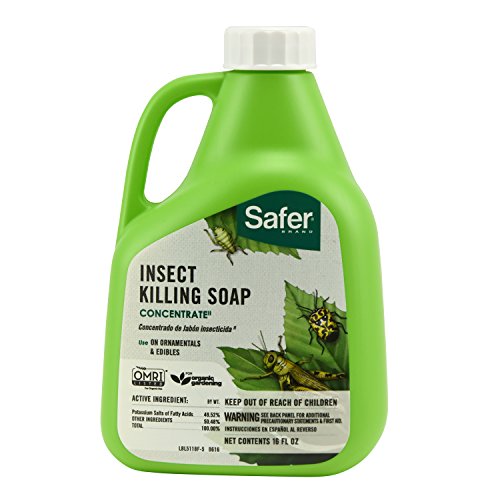
This insecticidal soap concentrate is gentle on most plants and is effective against soft-bodied pests including aphids, whiteflies, thrips and spider mites. It’s suitable for flowers, vegetables, herbs, houseplants, and outdoor trees and shrubs. Apply as a spray when insects appear and reapply every 5-7 days as needed.
Best for: Gardeners seeking a soap-based control that is compatible with a wide range of edible crops. Choose this if you want an OMRI-listed option for organic use. Limitation: It requires complete leaf contact for best results and may wash off in heavy rain.
Safer Brand Garden Insect Control

This multi-insect spray uses natural oils to target a broad range of pests, including aphids, beetles, caterpillars, mites and more. The formula is designed to be gentle on plants and safe for use around children and pets when used as directed. It works well on roses, fruit trees, vegetables and ornamentals.
Best for: Gardeners wanting a natural-oil solution for mixed plantings. Better for regular preventative use as part of a broader pest-management plan. Caution: Natural oils can cause leaf burn on stressed plants if overapplied or used in extreme heat.
Bonide Captain Jack’s Tomato & Vegetable Spray

This ready-to-use spray targets a broad spectrum of pests common to tomatoes and vegetables and provides supplementary disease-control benefits. It emphasizes early-season use for best results and can be used on listed fruits, vegetables and ornamentals, indoors or outdoors.
Best for: Gardeners who want an all-in-one solution for both insect pests and fungal diseases. Better for existing gardens with mixed crops. Caution: Follow label directions to avoid impact on beneficial insects and pollinators during flowering.
BioAdvanced Tomato & Vegetable Pest Control

This concentrated insect killer is designed to control aphids, caterpillars, thrips, tomato hornworms, whiteflies and more. It aims to protect fruit and vegetables when applied to gardening plants until leaves are adequately coated. It’s suitable for a variety of vegetables and related crops.
Best for: Gardeners who want a ready-to-use option with broad pest coverage for multiple vegetables. Choose this if you need rapid protection across several crops. Limitation: Concentrates require proper mixing to ensure even coverage and effectiveness.
Buying Guide: How To Choose A Safer Tomato And Vegetable Insect Killer
- What pest types are you targeting? Choose products labeled for your primary pests (aphids, caterpillars, whiteflies, mites, etc.).
- Is the product suitable for edible crops? Look for labels that explicitly mention vegetables, fruits or edibles and check harvest intervals if listed.
- Is the formula compatible with organic gardening? If you prefer OMRI-listed or natural-oil-based options, prioritize those products.
- What is your preferred application method? Ready-to-use sprays save time, while concentrates require mixing but may extend coverage between refills.
- How important is safety for kids and pets? Natural oils and soap-based formulas can be gentler, but follow directed use and application timing to minimize exposure.
- Will you use these products indoors or outdoors? Some formulas are designed for greenhouse use, while others are best for outdoor garden beds.
Practical tips for using safer insect killers
- Apply during cooler parts of the day to reduce leaf burn and maximize pest contact.
- Avoid spraying blooming plants to protect pollinators unless the product label permits it.
- Test on a small plant area first to verify tolerance before full garden application.
- Reapply as pests reappear, following the recommended interval on the label.
- Combine with cultural controls, such as proper spacing, pruning and sanitation, for best results.
Frequently asked questions
- Q: Are these products safe for organic gardens? A: Some products are OMRI-listed or designed for organic use. Always check the label for organic suitability.
- Q: Can I use these on my tomato plants during flowering? A: Many products advise avoiding flowering stages to protect pollinators unless specifically permitted. Check the label for guidance.
- Q: Do these products work against tomato hornworms? A: Several selections target caterpillars and hornworms as listed pests. Verify the pest list on the product label.
- Q: How often should I reapply? A: Reapply at the label-recommended interval or when pests reappear, avoiding overuse that can harm plants or beneficial insects.
- Q: Can I mix these with other garden chemicals? A: Do not mix unless the label explicitly allows it. Mixing can cause phytotoxicity or reduced effectiveness.
- Q: Are there safety precautions for pets? A: Use as directed, allow spray to dry, and keep pets away until safe according to label instructions.