Answer: A rolling spike lawn aerator is the right choice for improving soil airflow, water penetration, and nutrient delivery in moderately compacted lawns. This guide compares five top options to help homeowners and backyard hobbyists choose the best fit for their lawn size, soil condition, and physical comfort needs.
Who this is for:
– Small to medium-sized lawns with moderate compaction benefit most from a rolling spike aerator.
– Gardeners who prefer a manual, cost-effective tool and don’t mind physical exertion will find these options suitable.
– Homeowners seeking deeper soil penetration with added weight options may prefer heavier models with weight-fill capability.
| Product | Key Strengths | Best For |
|---|---|---|
| Colwelt Spike Lawn Aerator | Long 1.4-inch spikes; galvanized steel; 57-inch overall length | Lawn with light to moderate compaction; users who want a longer handle to reduce bending |
| Walensee Rolling Lawn Aerator (71″ handle) | 42 x 2-inch spikes; spiral tines; weight-adding capability with fillable drum | Dense soil or areas needing deeper penetration; users who value stability and weight customization |
| Senjoys 21″ Rolling Lawn Aerator | 45 preassembled spikes; 75″ handle; secure fastenings | Users needing quick assembly and minimal looseness during use |
| Suchtale 18-Inch Push Spike Aerator | 5-star shaped tines; lightweight rollers; weight tray option | Compact lawns; those who want a lightweight tool with optional added weight |
| Failenfeivp Rolling Lawn Aerator | 42 heat-treated spikes; heavy-duty galvanised steel; weight-loading ability | Heavier-duty use and soils with higher compaction; long-lasting construction |
Colwelt Spike Lawn Aerator, Heavy Duty Rolling Lawn Aerator
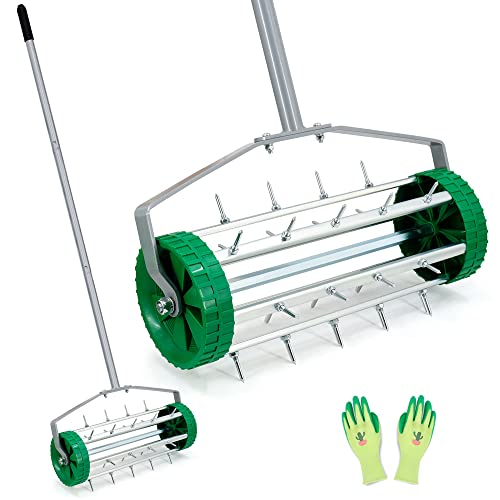
The Colwelt aerator uses a 1.4-inch spike design to penetrate modest soil compaction and improve the movement of air, water, and nutrients to grassroots. Made of galvanized steel, it resists rust for long-term outdoor use. The 57-inch-length handle supports a comfortable pushing posture, reducing back strain on larger lawns. Best for homeowners with light to moderate soil compaction who want a durable, straightforward tool. Caution: Extremely dense or wet soils may require additional weight or a different aeration method for deeper penetration.
Walensee Rolling Lawn Aerator with 71″ Handle

The Walensee model features 42 reinforced two-inch spikes arranged to provide stable rolling and deep penetration when weighted. Its spiral tines help maintain a smooth rolling action with fewer vertical jumps, which improves maneuverability on a variety of soils. The drum can be filled with sand or stones to adjust penetration depth, making this suitable for medium to higher soil density. Choose this if you want adjustable depth and robust build; avoid if you need a lighter, quick-use tool for very small lawns.
Senjoys 21″ Rolling Lawn Aerator

Senjoys emphasizes secure fastening and strong spikes, featuring carburized steel that offers greater strength and resistance to bending. The aerator uses a long 75-inch handle and a quick-clip connection system to simplify assembly and reduce looseness during use. It is best for average-size lawns where ease of assembly and back-friendly operation matter. Limitation: carbides and assembly hardware are designed for longer-term durability rather than high-penetration in extremely hard soils.
Suchtale 18-Inch Push Spike Aerator

Suchtale offers a compact 18-inch design with a five-star wheel pattern and 2-inch steel spikes, delivering efficient penetration into compacted soils. The roller is lightweight for easy pushing, while a weight tray allows adding bricks or other weights for deeper penetration. Best for smaller lawns or trickier terrain where maneuverability matters. Use caution if you expect very heavy clay soils; you may need additional weight or a larger model for deeper aeration.
Failenfeivp Rolling Lawn Aerator

The Failenfeivp unit highlights 42 heat-treated spikes on galvanised steel, designed to resist warping and provide stable, continuous rolling. It supports added weight through a drum to improve soil penetration, and its robust construction suits regular use on moderately compact soils. Choose this for long-term durability in a busy outdoor space; caution: ensure the drum is correctly loaded to avoid inconsistent aeration depth.
Buying Guide
What to consider when selecting a rolling spike lawn aerator:
- Soil conditions: Lightly to moderately compacted soils respond well to spike aerators; heavily compacted soils may benefit from heavier units or weighted designs.
- Handle length: Longer handles reduce bending but add weight; choose a comfortable height for your height and posture.
- Spike material and durability: Galvanized steel resists rust; heat-treated spikes resist bending under pressure.
- Weight options: Some models allow adding sand, stones, or bricks to increase penetration depth; assess how easy it is to add and remove weight.
- Maintenance: Look for corrosion resistance and simple parts replacement to prolong tool life.
- Size and maneuverability: Smaller lawns may benefit from lighter, compact aerators; larger yards may justify heavier, weight-enabled options for deeper penetration.
How to use effectively
- Water soil if dry to improve penetration before aeration.
- Roll over the lawn in multiple directions to create an even pattern of holes.
- Avoid over-aerating; target high-traffic zones and compacted areas.
Maintenance tips
- Regularly inspect spikes for bending or rust; replace damaged spikes promptly.
- Keep the roller clean and dry to prevent corrosion.
- Lubricate moving parts as needed to maintain smooth operation.
FAQ
- What is the primary benefit of a rolling spike aerator?
Answer: It creates shallow holes that improve air, water, and nutrient movement to grassroots, helping turf recover from compaction. - Can I use a spike aerator on clay soil?
Answer: Yes, but you may need a heavier model or added weight for deeper penetration; very dense clay may require additional aeration passes or a plug aerator for best results. - How often should I aerate my lawn?
Answer: For most lawns, once per season during the growing period is enough. High-traffic or heavily compacted soils may need more frequent aeration. - Is it better to aerate before overseeding?
Answer: Yes, aeration improves seed-to-soil contact and nutrient access, supporting germination and establishment. - Should I water the lawn before aerating?
Answer: Lightly watering to moisten the soil can improve penetration; avoid soaking the ground during aeration. - Can I fill the aerator with weights every time I use it?
Answer: Weighing the drum or tray is optional but can enhance penetration for dense soils; remove the weights when not needed to prevent unnecessary load.