Find the best perennial Black-Eyed Susan seeds for reliable, eye-catching color year after year. This guide highlights five top options that are well-suited for American gardens, including beds, borders, and container plantings. Each pick is evaluated for germination, growth habit, and attractiveness to pollinators. Whether you want a bold mass of yellow blooms or a vibrant border accent, these seeds offer practical choices for beginners and seasoned gardeners alike.
| Product | Seeds Count | Best For | |
|---|---|---|---|
| Seed Needs Black Eyed Susan Seeds | 120,000+ seeds | Large-scale plantings | High volume, reliable germination and storage-friendly packaging. |
| PLANTMEW Black Eyed Susan Seeds | 30,000+ seeds | Pollinator gardens, borders | Open-pollinated with strong germination; versatile for bed or container use. |
| NatureZ Edge Black Eyed Susan Seeds | 5,000 seeds | Indoor/outdoor versatility | Non-GMO, open-pollinated with adaptable planting options. |
| Groundio Black Eyed Susan Seeds | 7,500+ seeds | Small to large plots | Pollinator-friendly and cost-efficient per plant. |
| SWEET YARDS Extra Large Packet | 100,000+ seeds | Extensive borders, meadows | Very large packet for expansive plantings and gift packaging. |
Seed Needs Black Eyed Susan Seeds for Planting
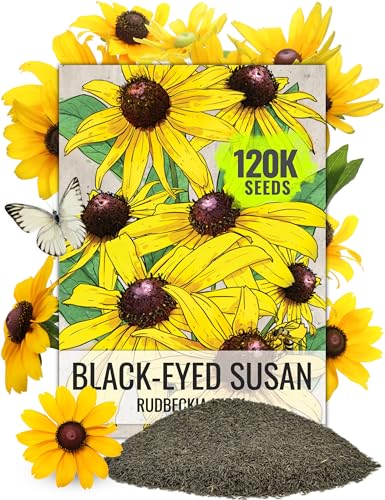
Appearance and background: Rudbeckia hirta features bright yellow, daisy-like flowers with dark centers. Native to North America, it thrives in open woods, prairies, and along roadsides with full sun to light shade. Growth: biennial or short-lived perennial, often treated as an annual in gardens, reaching 2 to 3 feet tall.
Best for: Large garden beds or wildflower meadows where you want a dependable mass of color. This bulk option suits buyers planning long-term border displays or pollinator patches.
Why selected: High seed quantity supports substantial coverage, and the plant’s robust, classic bloom makes it a staple for perennial-inspired designs. Caution: As a shorter-lived perennial, blooms may require re-seeding every few years in cooler climates.
PLANTMEW Black Eyed Susan Seeds for Planting

Features: Over 30,000 seeds; open-pollinated and rigorously tested for germination. Suitable for direct sowing in fall or spring after cold stratification. Attracts pollinators and supports ecosystems.
Best for: Garden beds, borders, and large containers where a bold mass of golden blooms is desired. This option is particularly good for beginner gardeners due to its open-pollinated traits and user-friendly sowing windows.
Why selected: High germination and broad planting versatility make this a strong all-around performer. Caution: Very large germination expectations may require careful thinning to avoid overcrowding.
NatureZ Edge Black Eyed Susan Seeds

Features: 5,000 seeds; non-GMO; open-pollinated varieties; versatile for indoor and outdoor planting in beds, borders, and containers.
Best for: Home gardens with mixed plantings or urban spaces where compact seed packs help maintain manageability. This option is chosen for its non-GMO status and planting flexibility.
Caution: Smaller seed quantity may require exact planning for larger landscape designs.
Groundio Black Eyed Susan Seeds

Features: 7,500+ seeds; non-GMO; heirloom wildflowers; suitable for indoor and outdoor use; supports pollinators.
Best for: Medium to large planting projects where pollinator-friendly varieties are valued. Selected for generous seed quantity and clear ecological benefits.
Limitation: As with many bulk seeds, germination can vary with soil conditions; ensure proper sowing depth and sun exposure for best results.
SWEET YARDS Extra Large Packet – Over 100,000 Seeds

Features: Over one full ounce of pure live seeds; 100,000+ seeds; premium packaging with planting instructions and reusable zipper pouch.
Best for: Large-scale projects such as meadows, expansive borders, or gifts. The large quantity and premium packaging make this a practical choice for bulk sowing.
Why selected: The sheer seed volume offers cost efficiency and planning flexibility for big landscapes. Caution: The abundance may surpass small garden needs; store properly to maintain viability.
Buying Guide
What should you consider when choosing Black-Eyed Susan seeds?
- Germination rates: Look for open-pollinated, Non-GMO seeds advertised with strong germination.
- Seed quantity: Bulk packets suit large spaces; smaller packets fit compact gardens.
- Planting window: Fall or spring sowing options provide flexibility for different climates.
- Growing habit: Decide between shorter-lived perennials or reliable annual-use options for immediate impact.
- Pollinator value: Most varieties attract bees and butterflies; consider garden layout to maximize visitation.
FAQ
- Q: Are Black-Eyed Susan seeds perennial? A: Rudbeckia hirta is a biennial or short-lived perennial in many climates and is often treated as an annual in gardens.
- Q: Do these seeds require stratification? A: Some varieties benefit from cold stratification, especially for fall sowing.
- Q: Will they attract pollinators? A: Yes, the bright yellow daisies attract bees, butterflies, and other beneficial insects.
- Q: How many seeds are needed per square foot? A: Plant loosely to achieve even coverage; germination and spacing depend on seed size and germination rates.
- Q: Can I plant them in containers? A: Yes, these seeds can be started in containers with adequate sun and drainage.
- Q: Do these seeds require special soil? A: They prefer well-drained soil with full sun; amend lightly for best growth.