Discover the best organic vegetable plug plants and seed starter plugs designed to simplify germination, minimize transplant shock, and boost early root growth. This guide targets home gardeners, urban farmers, and hobbyists who want reliable starts without synthetic additives. Each highlighted product uses organic ingredients and ready-to-use packaging to help you get healthier seedlings faster. The selection below focuses on plugs suitable for standard seed trays and transplant-ready roots.
Summary of top picks
| Product | Best For | Key Benefit | Notes |
|---|---|---|---|
| VPS OrganiPlug 50 Pack | Small to mid-size trays | Organic soil ingredients, kosher-certified | Great starter option for multiple crops |
| VPS OrganiPlug 2000 Pack | Bulk planting | Large quantity, organic materials | Best value per plug for big projects |
| LAPOND 50 Pcs Seed Starter Plugs | Home setups & beginners | Fast germination, easy transplant | Balanced peat & coco coir blend |
| ZeeDix 100 Pcs 30mm Pellets | Beginner to intermediate | Net-covered design, easy transplant | Compact and transport-friendly |
| YBB 50 Pcs Seed Starter Plugs | Budget-friendly starts | Rapid root development, included labels | Works well with hydroponic setups |
VPS OrganiPlug Hydroponic Seed Starter Plugs, 50 Pack

Best for: Home gardeners starting a moderate number of plants. These starter plugs use organic peat and coco coir with OMRI-listed ingredients to support seedling growth. They arrive ready-to-use, and the binding is food-safe and compostable. The plugs also feature a proprietary mix with nutrients and beneficial fungi to encourage robust root development. Use this if you want a ready-to-use organic option that fits standard seed trays. Limitation: The 50-pack may require purchasing multiple packs for larger projects.
VPS OrganiPlug Hydroponic Seed Starter Plugs, 2000 Pack
Best for: Large-scale projects or community gardens. This bulk option uses the same organic base as smaller packs, with plenty of plugs to seed many trays. The combination of organic peat, coco coir, and beneficial fungi supports strong early growth. Choose this if you need cost-effective, organic plugs for high-volume planting. Caution: Handling large quantities requires adequate storage to keep plugs dry and ready for use.
LAPOND 50 Pcs Seed Starter Plugs

Best for: Beginners and hobbyists who want a quick, simple germination setup. The plugs use premium organic peat and coco coir, delivering a balanced air-to-water ratio that accelerates sprouting and root growth. They are easy to use—soak, insert seeds, and place in a tray. A noted benefit is smooth transplant with minimal root disturbance. Limitation: Some growers may prefer additional nutrients beyond the included blend for certain crops.
ZeeDix 100 Pcs 30mm Seed Starter Pods

Best for: Beginners planning to transplant into outdoor planters later. These peat-based pods expand after water is added and come with a net cover design that helps with transport and transplanting. The product minimizes root disturbance, simplifying moves from starter to garden bed or container. Limitation: The design relies on proper expansion; under-watering can hinder expansion and rooting.
YBB 50 Pcs Seed Starter Plugs
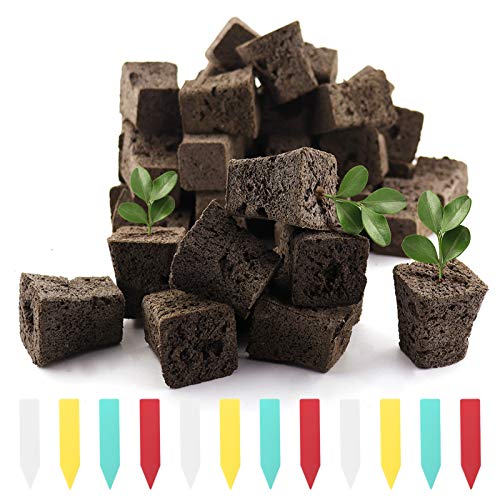
Best for: Budget-conscious growers who still want organic starter plugs with clear labeling. This set emphasizes rapid root development and includes 60 labels to help track multiple crops. The standard pH and micronutrient balance support healthy root growth for seeds or clones. Choose this if you need economical plugs with handy labeling. Limitation: The set size is modest; larger projects may require multiple packs or a mix with other brands.
Buying Guide: How To Choose Organic Vegetable Plug Plants
- What is your planting scale? For small balconies, the 50-pack options may be ideal; for community gardens, consider bulk packs to reduce cost per plug.
- Are you growing hydroponically or in soil? Some plugs are designed specifically for hydroponics and may include beneficial fungi; others are soil-friendly but equally effective in trays.
- What crops are you starting? Some plugs are marketed for general greens and herbs, while others are optimized for vegetables like lettuce, peppers, and tomatoes. Check compatibility with your target crops.
- Transplant considerations: Look for plugs that minimize root disturbance and offer easy transplanting to pots or garden soil.
- Organic certification: If you require OMRI-listed ingredients or Kosher-certified plugs, verify the labeling and ingredients on the packaging.
Practical Tips For Using Seed Starter Plugs
- Keep plugs moist but not soggy to maintain a stable air-to-water ratio for healthy roots.
- Label each plug or tray to avoid mix-ups when growing multiple crops.
- Transplant seedlings after the first true leaves appear to reduce transplant shock.
- Store unopened packs in a cool, dry place to maximize shelf life and maintain organic materials.
Frequently Asked Questions
- What are organic seed starter plugs? They are plant-starting media made from organic materials like peat and coco coir designed to germinate seeds and support early root growth.
- Are these plugs suitable for hydroponics? Some plugs are designed for hydroponics, while others work well in soil trays. Check the product description.
- Do plugs contain added nutrients? Many plugs include a nutrient mix and beneficial fungi; some may require supplemental nutrients as plants grow.
- Can I transplant seedlings directly from plugs to the garden? Yes, most plugs are designed to minimize root disturbance during transplanting.
- Which plug is best for beginners? A starter set with clear instructions, easy transplanting, and balanced organic media is typically best for beginners.
- Do these plugs come with labels? Some sets include labels to help track different varieties, while others may require separate labeling.