Finding the right Laurus nobilis variety depends on space, climate, and how you plan to use the plant. This guide highlights five top bay leaf trees best suited for American kitchens and patios, whether you want compact potted specimens or larger in-ground options. The selections cover both Saratoga and Standard varieties, with guidance on who benefits most from each type.
| Product | Best For | Format | Notes |
|---|---|---|---|
| Mediterranean Bay Leaf, Saratoga/Standard Varieties | Cooks needing refined foliage or ornamental pots | Two plants in cup | Offers both Saratoga and Standard comparisons |
| Mediterranean Bay Leaf, Standard Variety (2 Bay Laurel Plants in Sac) | Ground planting, rapid growth | Two plants in sack | Standard variety; larger, faster-growing |
| Mediterranean Bay Leaf, Standard Variety (2 Bay Laurel Plants in Cup) | Potted or container growth | Two plants in cup | Standard variety; better for containers |
| Bay Leaf Laurel Trees, Sweet Bay Leaves, Indoor/Outdoor (8–10 inches) | Herb gardens and containers | Starter plant 8–10 inches | Indoor/outdoor versatility |
| Bay Leaf Tree Live Plant, 1 Year Old (8–10 inches) | Small-space landscapes, containers | Starter plant 8–10 inches | Low-maintenance starter |
Mediterranean Bay Leaf: Saratoga & Standard, 2 Plants

This listing compares Saratoga Bay and Standard Bay within one package. Saratoga Bay features longer, narrower leaves and milder flavor, suited for refined culinary use and compact pots. Standard Bay offers faster growth and larger leaves, better for ground planting. Best for buyers who want both forms to compare in a small space or choose between ornamental potting and garden beds.
Best for: cooks needing nuanced leaf flavor in pots; container gardeners seeking a compact evergreen with edible foliage. Caution: Saratoga is more compact, but may produce fewer large leaves than Standard Bay.
Mediterranean Bay Leaf: Standard Variety (Two in Sac)

Standard Bay Laurel in ground-planting form typically grows faster and eventually reaches larger trees with broader leaves. It’s a solid choice for outdoor landscapes or herb gardens needing a robust, spreading canopy. Best for: outdoor beds and borders where rapid establishment matters. Caution: less ideal for very small spaces or container-only setups.
Mediterranean Bay Leaf: Standard Variety (Two in Cup)
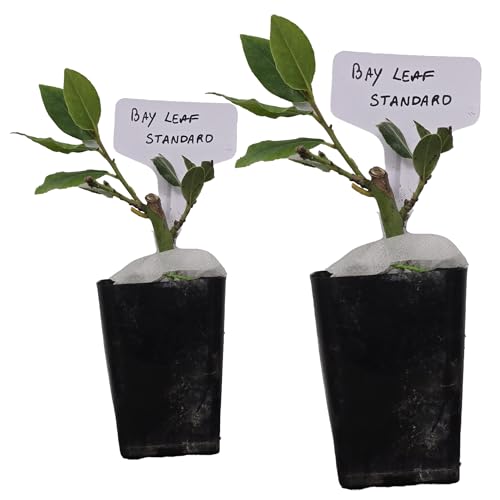
Container-friendly Standard Bay Laurel in cups is suitable for patios, porches, or indoor sunny spots. It tolerates pruning for shaping and can be moved indoors during colder months. Best for: gardeners who want a larger bay plant without committing to permanent ground space. Caution: may require more winter protection in cooler zones.
Bay Leaf Laurel Trees: Indoor/Outdoor 8–10 Inches

This product is ideal for herb gardens, landscaping, and containers. It thrives in full sun with well-drained soil and becomes drought-tolerant once established. Best for: those seeking a hardy, versatile bay tree for varied spaces. Caution: may require more watering in extremely hot climates.
Bay Leaf Tree: 1 Year Old 8–10 Inches

This 8–10 inch starter is suitable for indoor pots or outdoor beds in warmer climates. It’s a practical option for patios and balconies where space is limited. Best for: beginners or small-space gardens wanting an easy-to-grow bay tree. Caution: may require winter protection in cooler areas.
Bay Leaf Laurel Tree: 8–10 Inch Starter

Well-rooted 8–10 inch starters are ready for planting in containers or herb gardens. They thrive in sunny spaces and respond well to pruning to stay compact. Best for: gardeners who want an immediate, manageable bay plant. Caution: ensure proper drainage to avoid root issues.
Laurus Nobilis Indoor/Outdoor Starter Tree

Suitable for growing indoors in pots or outdoors in warmer climates. Prefers full sun and well-drained soil, with tolerance for partial shade. Best for: patios or balconies where space is at a premium. Caution: growth depends on climate; may need winter protection in cooler zones.
Three Bay Laurel Starter Plants

Three Bay Laurel live starter plants are ready for landscape, hedges, containers, and herb gardens. They thrive in full sun with well-draining soil and establish quickly as a decorative evergreen with culinary value. Best for: optimizing privacy screens or edible landscaping. Caution: plant spacing must be planned for mature size to avoid crowding.
Buying Guide: Bay Laurel Trees for Kitchens, Patios, and Gardens
- Space and placement: Choose Saratoga for pots and smaller spaces; Standard for ground planting and faster growth.
- Container vs. ground: Containers suit patios and indoor spaces; ground planting suits outdoor beds for larger trees.
- Sun and soil: Bay laurels prefer full sun and well-drained soil; drought tolerance improves after establishment.
- Maintenance: Regular pruning helps maintain shape and leaf density; plan winter protection in cooler zones.
- Culinary use: Leaves are edible fresh or dried; stronger flavors vary by variety and leaf shape.
FAQ
- Q: Can bay laurel be grown indoors? A: Yes, in a sunny spot with good drainage; bring indoors during cold weather in cooler regions.
- Q: Which variety is best for pots? A: Saratoga Bay is typically better for pots due to its compact growth.
- Q: Are bay laurels drought-tolerant? A: They are drought-tolerant once established but need regular watering while establishing.
- Q: How big does a bay tree get? A: In optimal outdoor conditions, it can reach 50–60 feet, but pruning can keep it compact.
- Q: Are bay leaves edible fresh? A: Yes, leaves are edible fresh or dried and used for seasoning.
- Q: Do bay laurels bloom? A: Fragrant flowers can bloom in spring on many cultivars.