Whether you’re creating a welcoming nesting spot or a charming garden decoration, a wooden bird house offers a natural, durable home for cavity-nesting species. This guide highlights five top wooden options that balance material quality, ease of maintenance, and versatility for different bird species. The top picks are best for backyard birders seeking durability, easy cleaning, and predator protection. A quick buyer’s table follows to compare core features at a glance.
| Product | Entrance Size | Best For | Key Benefit |
|---|---|---|---|
| SISTERBIRD 2 Pack Bird Houses | 1-1/2″ | Bluebirds, Wrens, Chickadees | Cedar with copper predator guard |
| NATUREYLWL Wooden Bird House | 1.57″ | Bluebirds, Finches, Wrens | Weatherproof natural wood, easy cleaning |
| Nature’s Way Cedar Bluebird House | Standard cavity | Bluebirds, other cavity nesters | Ventilation and accessible cleaning |
SISTERBIRD 2 Pack Bird Houses

The SISTERBIRD 2 Pack uses untreated cedar and includes a copper predator guard around the entrance to help deter predation. The 1-1/2″ entrance hole is sized to attract bluebirds, wrens, swallows, and chickadees, while helping exclude larger predators and unwanted occupants. Assembly is straightforward for adults and kids.
Best for: Households seeking a durable cedar option with predator protection and a compact, easy-to-clean design.
Why selected: Combines predator guard, natural cedar durability, and practical hole sizing for multiple common yard-nesting species.
Limitations: Assembly is required, and the units are sold as a 2-pack, which may be more space than some buyers need.
NATUREYLWL Wooden Bird House

This hanging wooden bird house is crafted from 100% natural wood with a protective waterproof finish. It features a 1.57-inch entrance with a built-in perch, designed to attract smaller species while helping deter larger intruders. A side access latch makes cleaning and nest preparation straightforward.
Best for: Yard or porch settings where easy cleaning and weather resistance matter most.
Why selected: Combines durable weatherproofing with a simple cleaning mechanism and compatible entrance size for several small birds.
Limitations: Does not include explicit predator guards, so buyers in predator-prone areas may want an add-on.
Nature’s Way Cedar Bluebird House

Designed for bluebirds and other cavity nesters, this cedar box emphasizes ventilation and predator defense with an elongated entrance shield. A hinged cleaning panel permits easy seasonal maintenance and inspection, supporting healthy nesting over years.
Best for: Builders who value optimized airflow and easy annual cleaning in bluebird habitats.
Why selected: Combines thoughtful ventilation with a predator-shielded entrance and simple maintenance.
Limitations: May require additional mounting hardware for some setups, depending on your outdoor space.
MIXUMON 10 Rooms Bird House
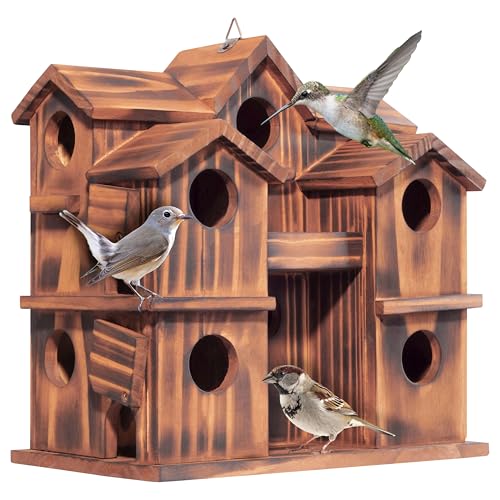
This multi-chamber nesting box offers ten separate compartments with individual cleaning doors. Made from carbonized pine, it provides a rustic, natural aesthetic and encourages multiple families to nest without cross-traffic. The back doors allow targeted maintenance and nest checks.
Best for: Bird lovers who want to host multiple species or family groups in one outdoor structure.
Why selected: Multi-room design increases nesting capacity while preserving easy cleaning access for each compartment.
Limitations: The large footprint may be less suitable for very small yards or limited mounting space.
Gute Bird House With Copper Guard

This cedar bird house uses a 1-1/2″ entrance hole to target bluebirds, wrens, swallows, and chickadees while excluding more aggressive species. The natural untreated cedar resists weather and a copper guard reduces predator access. It ships with mounting options for poles, trees, or fences.
Best for: Outdoor setups prioritizing predator protection and correct hole sizing in cedar housing.
Why selected: Combines copper predator protection with a durable cedar build and flexible mounting.
Limitations: Assembly is required, and the copper guard adds some cost relative to basic wooden houses.
Buying Guide
What to consider when choosing a wooden bird house:
- Species compatibility: Match entrance hole size to target species (1-1/2″ for many bluebirds and wrens; 1-1/8″ for wrens and chickadees in some models).
- Materials and finish: Unpainted cedar or natural pine offer durability and a natural look; weatherproof finishes help extend life in harsh climates.
- Predator protection: Copper guards or predator shields can reduce predation; consider hinge panels or clean-out access for maintenance.
- Ventilation and drainage: Adequate airflow and interior drainage prevent moisture buildup and promote nest health.
- Cleaning access: Removable or hinged panels simplify annual cleaning and nest preparation.
- Mounting flexibility: Look for options that work on poles, trees, walls, or fences to fit your space.
- Size and footprint: Multi-chamber houses increase capacity but require more space and sturdier mounting.
Frequently Asked Questions
- What size entrance hole attracts bluebirds?
– A 1-1/2 inch diameter hole is commonly used to attract bluebirds while deterring larger birds. - Is predator protection important for wood bird houses?
– Yes, predator guards or shields reduce predation risk and help protect eggs and young. - How often should I clean a wooden bird house?
– Clean annually or at the end of the nesting season to maintain hygiene and reduce parasites. - Do wooden houses need painting or staining?
– Unpainted cedar is natural and durable; painting is optional but may affect ventilation if not left untreated on interior surfaces. - Can I mount a wooden bird house indoors?
– Most wooden houses are designed for outdoor use; indoor mounting is not typical and may require adaptation.