Answering the common question buyers have: which ATV tow-behind flail mower attachments deliver dependable cutting on uneven fields, orchards, and rough edges? This guide highlights five top options suited for different needs—from heavy brush clearance to field maintenance and large-property mowing. Each entry explains who it’s best for, what makes it stand out, and any notable limitations. A quick comparison table follows to help you decide at a glance.
Product Quick Reference
| Product | Best For | Key Benefit |
|---|---|---|
| Titan Attachments 48″ Tow-Behind Flail Mower | Large, uneven terrain and fields | Powerful Briggs & Stratton engine; 2″ hitch compatibility |
| MechMaxx 48″ ATV120 Tow-Behind Flail Mower | Medium-to-large properties with slopes | Adjustable cutting height; wide 48″ width |
| GIYI 47.24″ Tow-Behind Flail Mower | Heavy weed clearing and uneven ground | 15HP engine; wide cutting swath; mulching capability |
| MechMaxx 55″ ATV140 Tow-Behind Flail Mower | Large properties and perimeter mowing | 23HP engine; 55″ working width |
| KUAFU 39.75″ 3-Point Sleeve Hitch Rear Blade | Snow removal and grading via rear blade option | Rear blade with angle adjustability |
Titan Attachments 48″ Tow-Behind Flail Mower

This unit is designed for ATVs and UTVs with a 2″ ball receiver and can cut through tall grass, field edges, and brush up to 2″ thick. It offers a clean, consistent finish even on uneven ground. The Briggs & Stratton 420cc XR Professional Series engine delivers 13.5 HP and 3,150 RPM, with electric start for quick activation. It’s a solid pick for buyers maintaining fields, orchards, or acreage where reliable power and even mulch are paramount. A notable limitation is that performance drops if the ground is extremely woody or dense beyond the specified thickness; users should plan for gradual passes in very thick vegetation. Best for serious field maintenance and larger-acreage work that requires steady power and a robust mower finish.
Who it’s best for: Landowners with medium to large plots who need consistent mowing on uneven terrain and brush control.
MechMaxx 48 inch ATV120 Tow-Behind Flail Mower

Equipped with the ZONSEN 459cc 15HP engine and electric start, this 48″ offset flail mower delivers strong performance for larger sites. The 0.4 inch to 2.5 inch adjustable cutting height and 28 hammer blades enable versatile clearance around buildings and along field borders. It’s best for property owners who need an offset mower with precise height control to handle varied terrain. A potential limitation is that higher-powered engines require appropriate maintenance, including fuel and oil management. Choose this if you want a balance of power, adjustability, and a 48″ working width for quicker coverage.
Who it’s best for: Property managers seeking a broader mowing width with clear height adjustments for mixed terrains.
GIYI 47.24″ Tow-Behind Flail Mower

This mower features a 15HP 420cc E-Start gasoline engine and a 47.24″ cutting swath, making it well suited for large-scale weed and brush removal in orchards, woodlands, and expansive fields. The floating flail rotor ensures smooth operation over ridges and slopes, while the high-efficiency cutting system mulches weeds and residue, returning nutrients to the soil. A caveat is that high-hilly terrain can stress even a strong mower, so expect occasional adjustments for slope handling. Best for expansive weed removal where a wide swath and mulched residues improve soil health.
Who it’s best for: Landscapes requiring aggressive weed control with mulch-friendly output on uneven terrain.
MechMaxx 55″ ATV140 Tow-Behind Flail Mower

The 55″ wide model uses a ZONSEN 679cc 23HP dual-cylinder electric-start engine, offering substantial cutting power for large properties. The 0.4-2.5 inch adjustable mowing height supports customization for different surface conditions, while the broader working width accelerates coverage around buildings and fields. It’s best for buyers with extensive mowing needs who prioritize maximum width and engine power. A limitation is that the larger unit may require more storage space and hitch clearance than smaller models. Choose this if you need top-tier performance for big estates.
Who it’s best for: Large properties, perimeters, and commercial sites where maximum width and power are beneficial.
Titan Attachments 5 Pack Replacement Y Blades

This 5-pack set provides direct replacement Y-blades for the Titan 48″ tow-behind flail mower, helping maintain cutting efficiency and equipment safety. Blades should be checked for cracks or wear and bolts tightened as part of routine maintenance. The blades are forged from durable carbon steel at 8mm thickness, ensuring resilience in regular use. Best for buyers who want affordable, ready-to-install maintenance supplies to maximize mower uptime. A limitation is that blades wear unevenly if cutting through very dense material, requiring even inspection both before and after use.
KUAFU 39.75″ 3-Point Sleeve Hitch Rear Blade

This rear blade attachment is designed for snow removal, leveling soil, and road/grading tasks. It features powder-coated steel for durability and a 3-point sleeve hitch compatibility, making it suitable for a range of ATVs, UTVs, and lawn tractors. The angle adjustment and 180-degree rotate option offer flexible working patterns. A caution is that performance depends on tractor hitch compatibility and traction; tread tires or chains may be needed on soft surfaces. Best for buyers who need a versatile rear-blade option for winter clearing or surface leveling.
PPOLB 32″ Tow-Behind Disc Plow Harrow
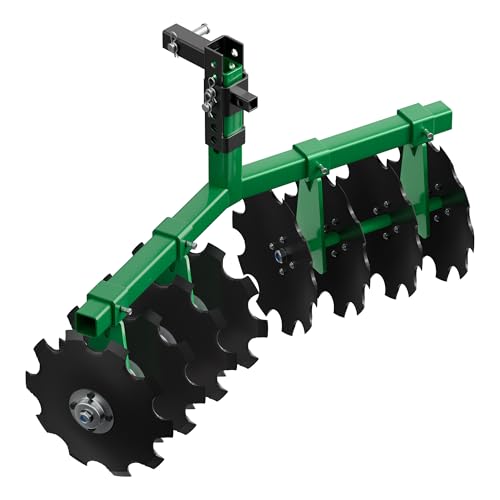
This 32″ disc harrow features eight 12″ notched steel discs and universal 2-inch receiver compatibility. It provides adjustable working height for soil prep and cultivation across ATV/UTV platforms. It suits buyers focused on soil conditioning and seedbed preparation with a compact footprint. Potential limitation is narrower width compared to larger flail mowers, making it slower for broad-area clearing. Best for precise soil preparation and cultivation tasks on smaller plots.
Buying Guide
- Loader compatibility and hitch type: Verify your ATV/UTV hitch is 2″ ball receiver for flail mowers or a sleeve hitch for rear blades. This affects compatibility and ease of attachment.
- Engines and power: Larger properties benefit from higher HP engines (15–23 HP). For smaller fields, mid-range power is adequate and may save fuel.
- Cutting width and height range: Wider mowers cover more ground, but require more power and space. Adjustable height helps adapt to terrain and residue thickness.
- Blade design and mulching capability: Y blades and hammer blades both offer clean cuts and mulch. Consider maintenance costs and blade availability.
- Terrain and tasks: For uneven terrain, models with floating rotors and offset mowing handle ridges better. For weed-heavy or brush work, look for robust engines and wide swaths.
- Maintenance and parts: Replacement blades and belts should be readily available. Check the availability of spare parts and service that fits your schedule.
- Storage and handling: Larger mowers demand more storage space and hitch clearance. Ensure you have adequate room and safe towing capacity.
Frequently Asked Questions
- What is a tow-behind flail mower used for? It is used to clear tall grass, brush, and weeds from large or uneven properties by attaching to an ATV or UTV.
- What should I consider when choosing blade type? Y blades offer wide cutting arcs and mulching; hammer blades can cut tougher materials. Availability and replacement costs matter.
- Do I need a lot of power for a 48-inch mower? A 13–23 HP range is common; terrain and vegetation density determine required power.
- Can these attachments handle slopes? Many designs include floating rotors or offset mowing to adapt to slopes, but operation on steep hills should proceed with caution and proper traction.
- Are rear blades or disc harrows better for soil prep? Rear blades level surfaces and remove snow; disc harrows are better for soil disruption and seedbed preparation.
- What maintenance is required? Regular blade checks, bolt tightening, and engine maintenance as with any powered attachment.