Answering the most common buyer need: a reliable 3/4″ garden valve that fits standard hoses and irrigation setups. These 3/4 inch valve options are best for homeowners, hobby gardeners, and outdoor enthusiasts who want easy water control, quick installation, and durable brass or brass-like construction. This guide highlights five top picks, explains who each is best for, and clarifies key differences to help you choose. The table below compares core details at a glance.
| Product | Best For | Notable Feature | Limitations |
|---|---|---|---|
| RouLiPouLi 3/4″ Garden Valve Kit | Home irrigation with dual male threads | Heavy-duty brass; 1/4 turn shut-off | Includes two valves; may require thread sealing |
| MI MADOL 3/4″ Ball Valve | Garden patios and easy hose connections | Effortless quarter-turn operation | Basic hose thread only |
| SharkBite 3/4″ MHT Garden Valve | Tight spaces; push-to-connect convenience | Push-to-connect inlet; versatile with pipe types | May require disconnect tool for removal |
| BILAL 2 Pack Garden Shut Off Valve | Budget-friendly long-term use | Extended handle; two-pack value | Octagonal design may feel bulkier |
| Sanpaint 3/4″ Brass Garden Valve | Simple, one-way shut-off for hoses | Heavy-duty brass; adjustable flow | Limited to 3/4″ hose connections |
RouLiPouLi 3/4″ Garden Valve Kit
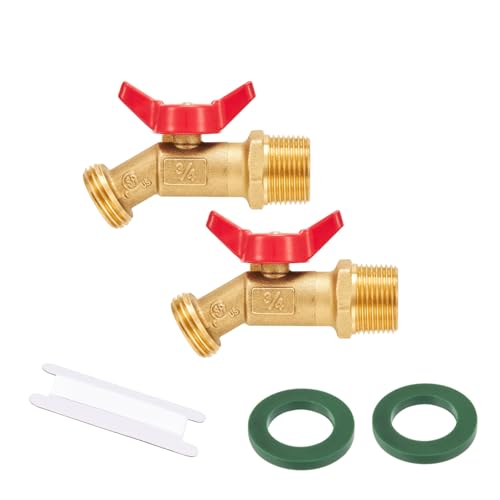
Product overview: This kit uses heavy-duty brass with rust resistance and features a 1/4 turn shut-off handle for quick operation. It features a 3/4″ GHT hose thread and a 3/4″ NPT pipe thread, providing compatibility with most garden hoses and irrigation fittings. It is noted for low lead brass content (less than 0.25% lead), making it suitable for potable water use in daily life.
- Best for: Home irrigation tasks requiring reliability and ease of use, especially where a dual male thread setup is needed.
- Why selected: The kit offers solid brass construction and straightforward operation, reducing the risk of leaks and corrosion over time.
- Caution: Verify threaded compatibility with existing fittings to avoid mismatches; ensure proper sealing to prevent leaks.
MI MADOL Brass Ball Valve 3/4″

Product overview: A 3/4″ male NPT inlet paired with a 3/4″ hose outlet, designed for gardens and patios. The quarter-turn operation makes flow control quick and direct, and the standard hose thread facilitates straightforward hose connections. This valve is best when you want a simple, reliable shut-off with minimal space requirements.
- Best for: Gardeners who value quick, one-handed control and simple installation.
- Why selected: Easy operation with a standard 3/4″ hose connection; robust enough for regular outdoor use.
- Caution: Not ideal where complex angle configurations are needed; consider space when mounting.
SharkBite 3/4 Inch MHT Garden Valve

Product overview: This valve is a brass push garden valve with a multi-turn shut-off and a mounting tab design. It offers a 3/4″ garden hose outlet with a 1/2″ or 3/4″ push-to-connect inlet, compatible with PEX, CPVC, PE-RT, SDR-9 HDPE, and copper pipes. It can be mounted to a post and supports quick installation without tools.
- Best for: Installers working in tight spaces or needing a post-mounted solution.
- Why selected: Push-to-connect capability reduces installation time and tools required; versatile pipe compatibility.
- Caution: In wet-line scenarios, a disconnect tool may be needed for future removal.
BILAL 2 Pack Garden Shut Off Valve

Product overview: This set includes two extended-handle, 3/4″ brass shut-off valves. The extended handle design eases operation, especially when wearing gloves or working with wet hands. The octagonal body supports solid gripping and straightforward installation.
- Best for: Budget-conscious buyers needing multiple valves for a larger watering setup.
- Why selected: Extended handle design improves leverage and ease of use; two-pack value can simplify multi-zone irrigation.
- Caution: Bulkier handle may be less ideal in very tight spaces; confirm clearance before mounting.
Sanpaint 3/4″ Brass Garden Valve

Product overview: A standard 3/4″ brass valve with a large plastic handle for easy grip and operation. It’s described as a one-way valve suitable for common garden hose connections, with adjustable flow control for simpler watering management.
- Best for: Home gardeners seeking a straightforward, one-way shut-off valve.
- Why selected: Brass construction and adjustable flow offer reliable, long-term use.
- Caution: May not suit complex piping setups or multi-directional flow requirements.
Buying Guide: 3/4″ Garden Valve Essentials
- Material matters: Brass valves resist corrosion and wear; lead-free brass is preferred for potable water connections.
- Thread compatibility: Common configurations include 3/4″ NPT (inlet) and 3/4″ GHT/MHT (hose thread); confirm both inlet and outlet types before purchasing.
- Operation style: Quarter-turn valves allow fast shut-off; multi-turn or extended-handle designs reduce effort in cold weather or with gloves.
- Space considerations: Angled or push-to-connect models suit tight spaces and post-mount installations; measure mounting area before selecting a shape.
- Installation tips: Use Teflon tape on threaded connections to minimize leaks; ensure clean, dry threads during assembly.
- Maintenance: Check for leaks around joints regularly; replace worn washers or seals as needed to maintain performance.
Frequently Asked Questions
- What is a 3/4″ garden valve best used for? It’s ideal for controlling water flow in standard garden hoses, irrigation lines, and outdoor spigots with 3/4″ connections.
- Do these valves fit all hoses? Most 3/4″ valves fit common garden hoses, but always verify inlet and outlet thread standards (NPT vs. GHT/MHT).
- Are brass valves safe for potable water? Yes, many are made from lead-free brass and are suitable for potable water when properly installed.
- Which valve is best for tight spaces? Push-to-connect and 45-degree angled models are designed for compact installations in restricted areas.
- Can I install these valves myself? Yes, most 3/4″ garden valves are designed for do-it-yourself installation with basic tools and proper sealing.
- What maintenance do these valves require? Periodic inspection for leaks, cleaning threads, and replacing seals or washers when needed.